

Smart agricultural robotic systems for autonomous plant monitoring and harvesting
Objectives
- To create deep learning-based agricultural inspection algorithms for crop disease detection and real-time soil analysis for farmers.
- To develop and implement computer vision-based control algorithms for crop maturity classification and deployment on the robotic platforms.
- To integrate semi-autonomy or full autonomy of the robot for manipulating indoor agricultural crops.
Group members
- Prof. Lakmal Seneviratne, Group Leader/ PI
- Dr. Irfan Hussain, Co-PI
- Dr. Maryam Alshehhi, Co-PI
- Dr. Lochan Kshetrimayum, Post Doctoral Fellow
- Dr. Asim Khan, Post Doctoral Fellow
- Dr. Rajmeet Singh, Post Doctoral Fellow
- Eng. Abdel Rahman, Research Assistant
One of the primary goals of this research is to deploy deep learning-based computer vision algorithms in agri-robotics to classify and identify tomato fruit maturity in occluded environments and varying light conditions. To initiate the tomato maturity classification and identification research activity, we collected a dataset of tomato crop images from greenhouses in Abu Dhabi. This dataset serves the dual purpose of detecting and categorizing tomato maturity stages, as well as identifying diseases present in tomato leaves.
We proposed a deep learning-based convolutional transformer framework. This framework effectively classifies and grades tomatoes under different lighting, occlusion, and ripeness conditions. Through experimental analysis, we evaluated the framework's performance in segmenting and grading tomatoes based on color, shape, and size. In addition, we introduced the KUTomaData dataset, which was specifically curated to train deep learning models for tomato segmentation and classification. This dataset includes a wide range of images from greenhouses across the UAE, encompassing diverse lighting conditions, viewing perspectives, and camera sensors. The availability of KUTomaData fills a gap in the deep learning community, providing a dedicated resource for tomato-related research.
The comprehensive pipeline of our proposed framework, which focuses on the classification and detection of tomato maturity as well as the comparative results of our method against other state-of-the-art models, are shown in Figure 1 (a and b).
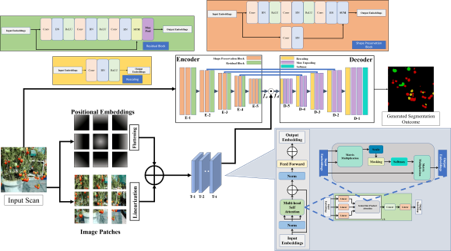
a.) The block diagram of the proposed model.
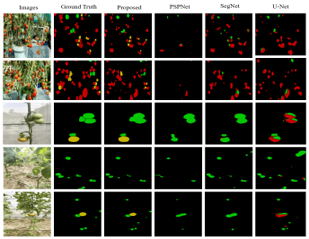
b.) Comparative results of our proposed framework with other state-of-the-art models.
The comparative results in terms of mAP highlight the robustness, accuracy, efficiency, and scalability of our method. Moreover, our approach can be easily adapted to new datasets. We are confident that our work has the potential to make a significant impact on the tomato industry by effectively reducing crop losses and improving crop yields. The proposed method and sample results are shown in the Figure 2.
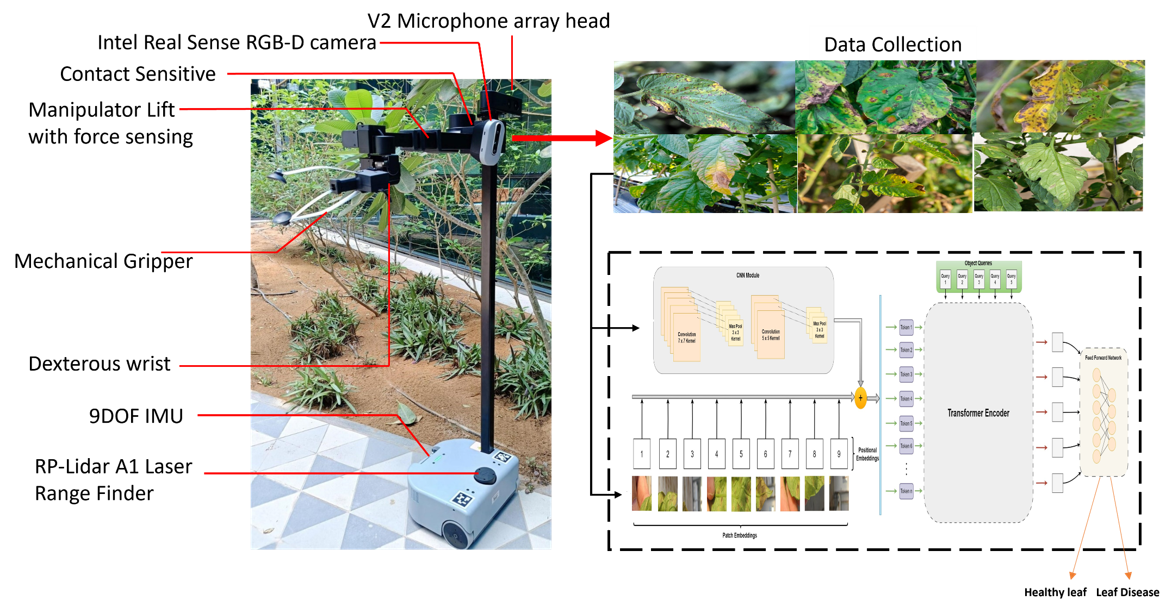
a.) The block diagram of the proposed model.
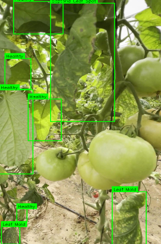
b.) Sample results of our proposed framework.
This groundbreaking research, conducted in the UAE, marks the inception of a journey towards establishing a comprehensive spectroscopic library of materials, promising significant advancements in agricultural and environmental science.
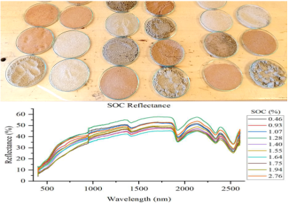
Figure 3: The collected soil samples from UAE agriculture fields and their spectral signature as recorder in the laboratory using spectroradiometer.
Do you find this content helpful?
عفوا
لايوجد محتوى عربي لهذه الصفحة
عفوا
يوجد مشكلة في الصفحة التي تحاول الوصول إليها