UAEU Discusses Developments in Space Science and Exploration Missions at National Conference
November 05, 2026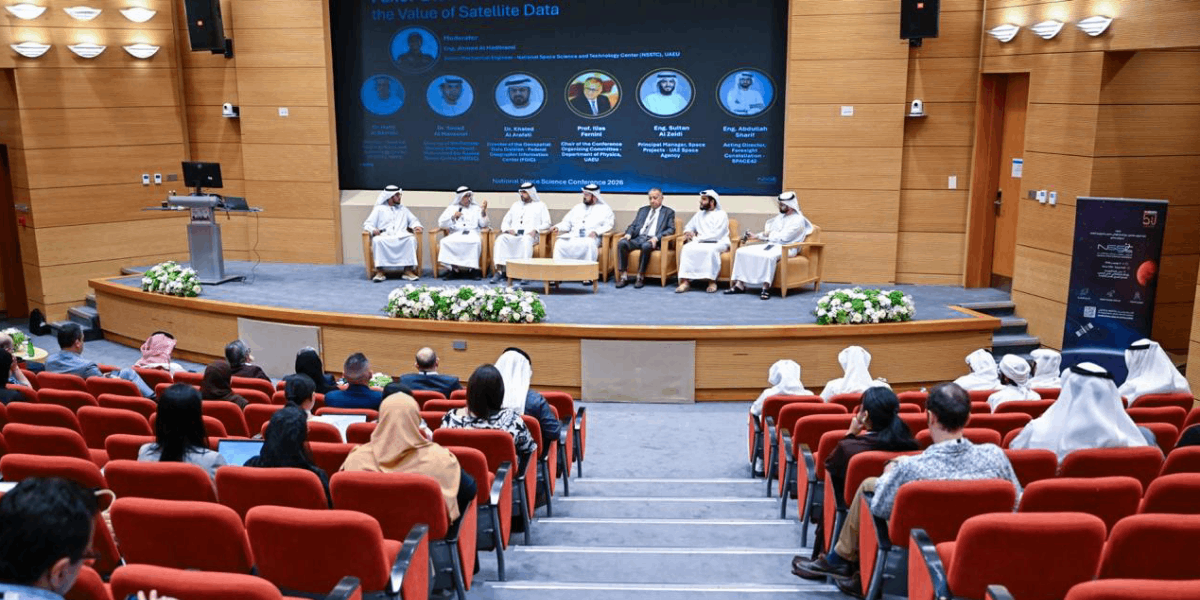
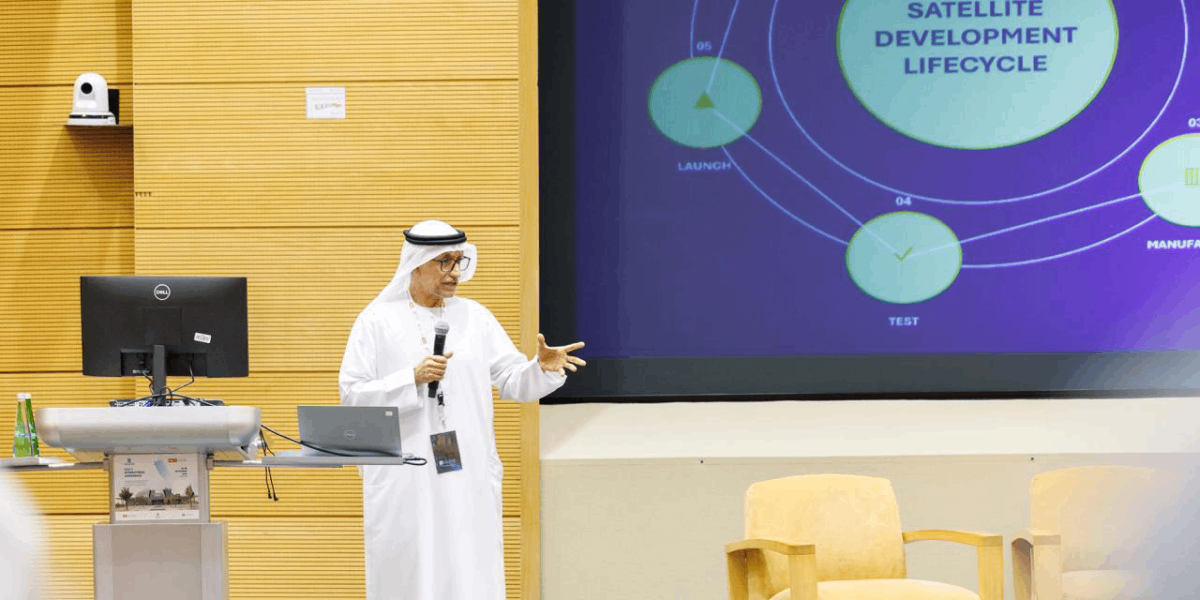
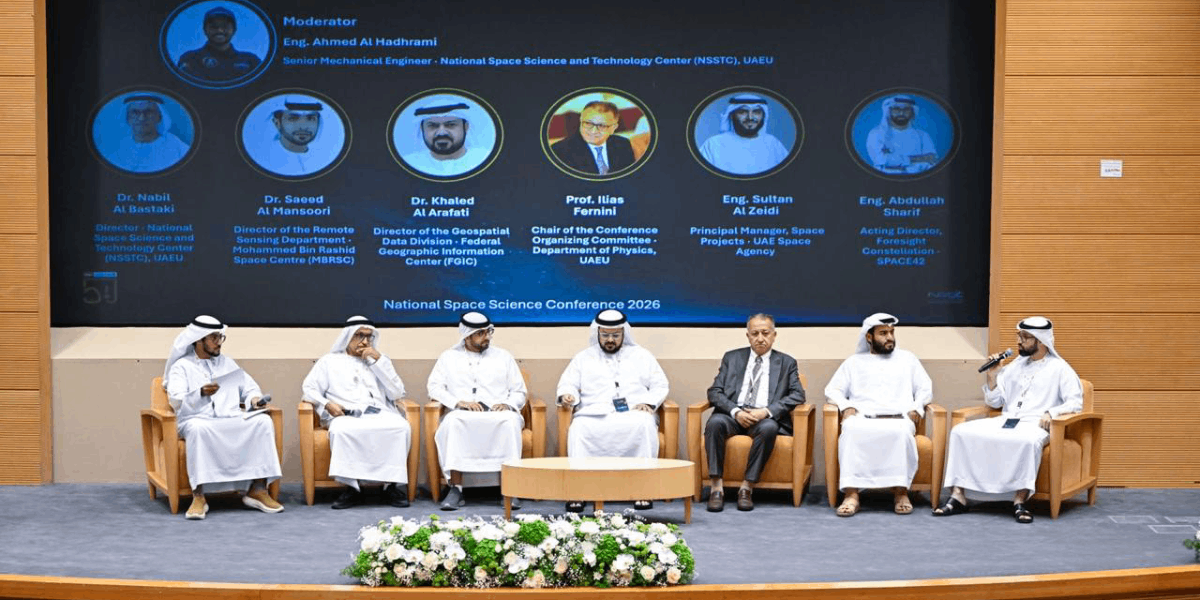
The conference brought together researchers and specialists from universities and institutions involved in the space sector
The United Arab Emirates University (UAEU), represented by the College of Science,
in collaboration with the National Space Science and Technology Center, organized
the National Space Science Conference (NSSC 2026) on 4 and 5 November 2026. The conference
brought together researchers and specialists from universities and institutions involved
in the space sector to discuss the latest research in space science, astronomy, and
astrophysics, and explore developments in space missions and the applications of artificial
intelligence in data analysis and environmental monitoring.
The conference brought together fundamental research aimed at understanding the universe and studying planets, stars, and galaxies, alongside technological applications related to satellite development and the use of satellite data. The programme featured keynote lectures, parallel scientific sessions, a panel discussion, and research poster presentations.
Prof. Maamar Benkraouda, Dean, College of Science at UAEU, emphasized that organizing the National Space Science Conference reflects the College's commitment to supporting scientific research in astronomy, astrophysics, and space science, while connecting university education with scientific and technological advancements in the sector. He said: "We are keen to provide students and young researchers with opportunities to present their research and engage with specialists, enhancing their research skills and contributing to the development of national talent capable of advancing the country's space sector."
Prof. Ilias Fernini, Chair of the Conference Organizing Committee, explained that the scientific programme brings together findings from space missions, astronomical research, and satellite data applications, providing an opportunity to explore the connections between these fields and exchange expertise on research approaches. He added: "The conference provides an opportunity to discuss research findings and the challenges of analysing space data, explore areas of collaboration among research teams, and particularly examine the use of artificial intelligence and remote sensing to develop applications that support environmental monitoring and planetary studies."
In a keynote lecture, Dr. Noura Rashid Al Saad from the UAE Space Agency presented the scientific findings of the Hope Probe following five years of observations of Mars. The sessions also featured research based on data from the Emirates Mars Mission, examining dust storms and their daily and seasonal variations, the planet's surface temperature, the influence of crustal magnetic fields on the composition of its atmosphere, and interactions between the upper atmospheric layers.
UAE space missions and projects featured prominently in the scientific programme, with presentations covering the Emirates Mission to the Asteroid Belt, the Arab Satellite 813, and the Emirates Lunar Mission. Participants also discussed the development and operation of scientific payloads in orbit, the design of robotic systems for deploying payloads on lunar landers, and the use of small satellites in space weather applications.
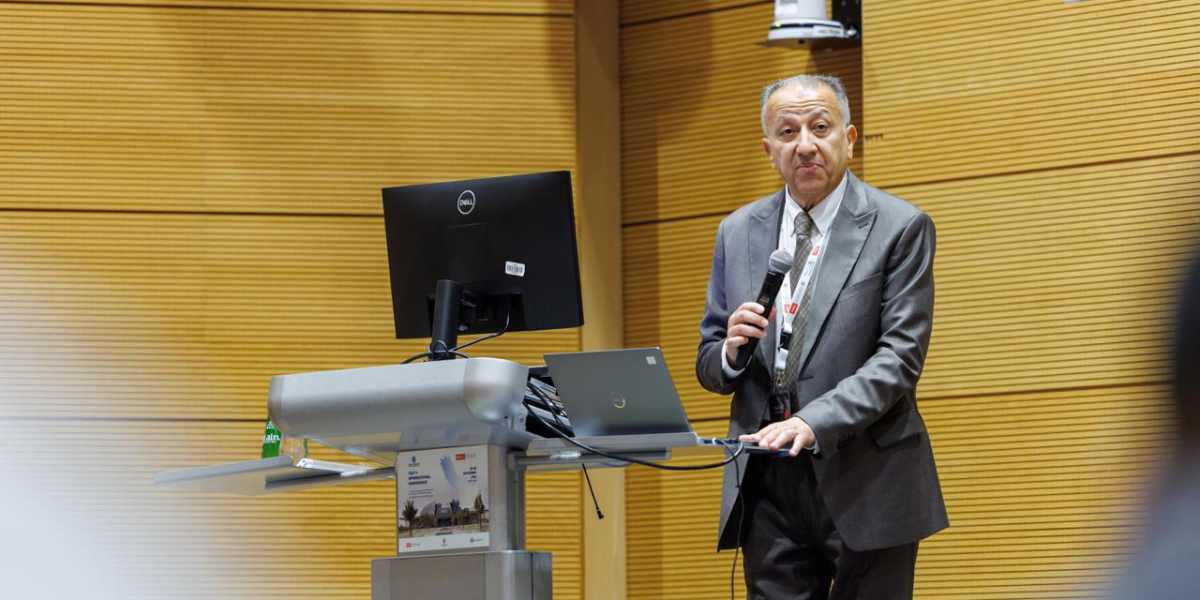
In astronomy and astrophysics, Prof. Nidhal Guessoum from the American University of Sharjah delivered a keynote lecture examining the relationship between the afterglow of gamma-ray bursts and their initial phase. The sessions also covered studies on star formation, the evolution of star clusters and galaxies, dark matter, cosmic rays, and gravitational waves generated by binary black hole systems. Other research addressed planetary atmospheres and exoplanets, as well as the analysis of observations from the James Webb Space Telescope.
The conference explored ways to expand the use of satellite data through a panel discussion titled "Beyond the Orbit: Unlocking the Value of Satellite Data", alongside research papers addressing surface water quality monitoring in the UAE, environmental monitoring using remote sensing, and mineral mapping in the Hajar Mountains using hyperspectral imagery.
The application of artificial intelligence and deep learning also featured in several research presentations, covering the analysis of satellite imagery and the detection of changes, road network extraction, and the application of vision models in space imaging. Other studies focused on the automated detection and classification of solar radio bursts, modelling the Sun's surface magnetic field, and identifying potentially hazardous asteroids.
The conference featured research contributions from the UAE Space Agency, Mohammed Bin Rashid Space Centre, Khalifa University, the University of Sharjah and Sharjah Academy for Astronomy, Space Sciences and Technology, the American University of Sharjah, New York University Abu Dhabi, Zayed University, Space42, and other research institutions.
The conference provided a platform for researchers to connect and exchange research methodologies and expertise in studying astronomical phenomena and analysing space data. It also offered an opportunity to explore collaboration on projects that bridge fundamental research and technological development, while expanding the use of space science in environmental and developmental applications.
Recent press releases
UAEU Discusses Developments in Space Science and Exploration Missions at National Conference
UAEU Celebrates Flag Day, Renewing Allegiance and Loyalty to the Country and Its Leadership
United Arab Emirates University's College of Education Organises Conference on "Quality Education for a Sustainable and Transformative Future"