
UAEU Research Team Develops Animal-Free Protein Analogs Using 3D Printing
June 02, 2026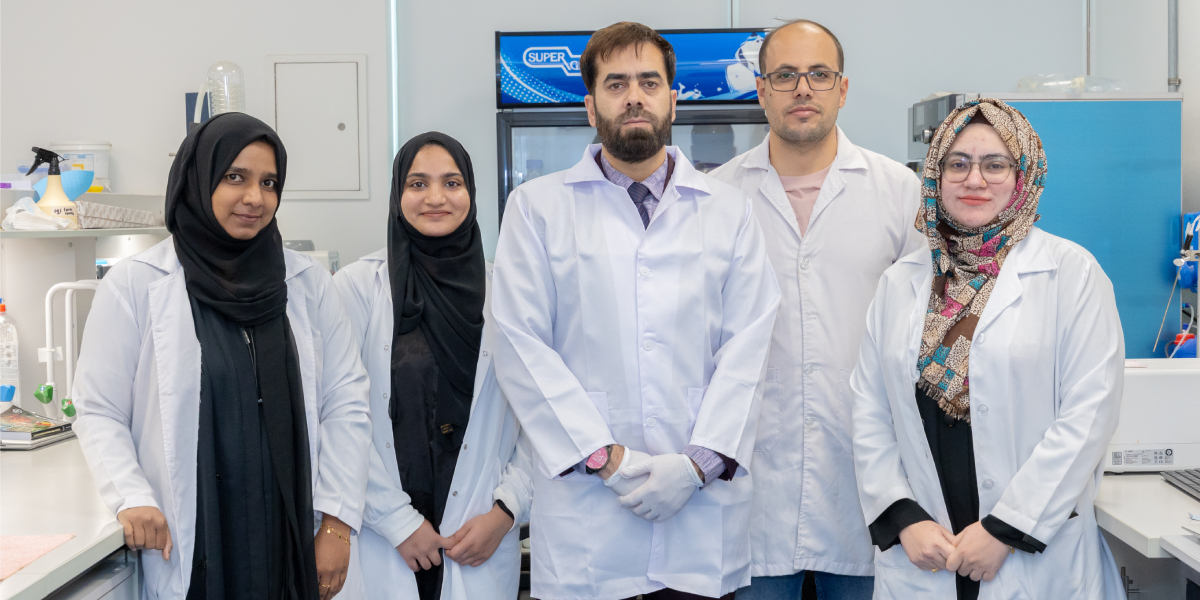
Scientific Research Opens New Horizons in Sustainable Food
Molecular Simulation Techniques and Artificial Intelligence Open New Horizons for Developing Innovative Food Alternatives
The United Arab Emirates University continues to advance research solutions addressing challenges across vital sectors. A research team from the Department of Food Science at the College of Agriculture and Veterinary Medicine has successfully produced animal-free food analogs and developed protein-rich meat alternatives. These innovations offer consumers nutritious and more sustainable food choices through advanced technologies that integrate molecular simulation, 3D printing, and artificial intelligence, underscoring the university’s commitment to food security, environmental sustainability, and public health.
A Scientific Shift Toward More Sustainable Food
Prof. Sajid Maqsood, a professor specializing in sustainable food systems at UAEU, explained that animal-based products are facing increasing challenges, noting that plant proteins represent a more sustainable and resource-efficient alternative. He added that such proteins are also associated with lower risks of disease transmission between animals and humans.
He further noted that this trend coincides with growing global interest in meat analogs, with market projections suggesting the sector could reach $49.5 billion by 2036. Despite this momentum, many products currently available still struggle to replicate the authentic texture of meat, which remains a key barrier for consumers. To address this challenge, the UAEU team adopted a scientific methodology known as the “bottom-up approach.” Researchers examined interactions among different plant proteins at the molecular level to identify combinations capable of producing textures similar to real meat.
The team also applied molecular docking and dynamic simulation techniques commonly used in drug discovery to determine which proteins are most compatible and best suited to form the desired structure. According to Prof. Maqsood, this approach helps predict which protein combinations will perform most effectively when blended.
Developing Chicken, Fish, and Egg Analogs
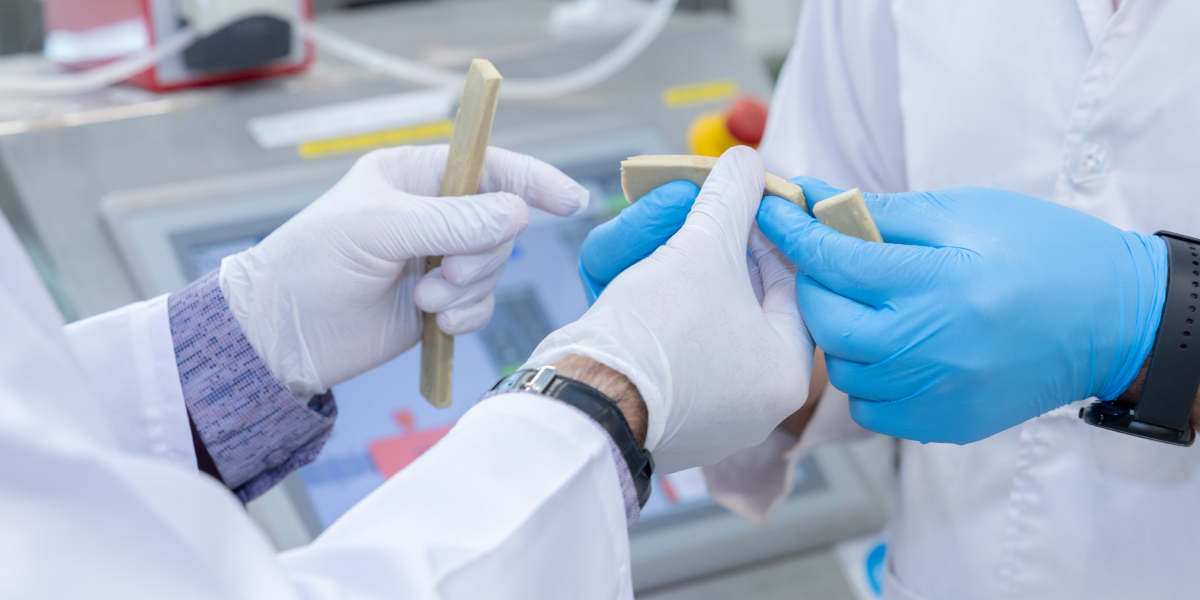
Dr. Ibrahim Khalifa, a food science researcher at UAEU, confirmed that the team has already developed analogs for chicken, fish, and eggs. In a study published in the journal Food Hydrocolloids, conducted in collaboration with leading international universities, the team demonstrated the feasibility of producing a fish analog using 3D printing. The experiment utilized soy, mung bean, and potato proteins to closely replicate the texture of real fish. Dr. Khalifa noted that a key advantage of this approach is that it goes beyond replicating the form and texture of conventional products. It also enables enhancement of the nutritional value through targeted fortification.
He explained that natural fish contains little dietary fiber, whereas the developed alternative can be enriched with fiber, making it more beneficial from both nutritional and medical perspectives. He emphasized that the goal is not only to imitate traditional foods but to improve them.
3D Printing Reduces Waste and Expands Production Possibilities
3D printing technology offers multiple advantages, enabling the production of protein-rich foods in diverse and precise shapes. This is particularly valuable for children, as food can be designed in visually appealing forms that encourage consumption. The technology also significantly reduces waste compared with traditional manufacturing methods. Dr. Khalifa noted that products can be digitally designed, resized, and printed before being transformed from liquid into solid form, adding that 3D printing can reduce waste by up to 95%.
International Collaboration Strengthens Research Quality
Prof. Maqsood highlighted that UAEU researchers have established strong partnerships with leading international academic institutions with expertise in alternative protein research. He explained that this collaboration is based on integrating knowledge and expertise, helping advance this specialized field while giving UAEU’s research a clear international dimension.
Artificial Intelligence to Play a Greater Role in the Next Phase
The research team plans to expand the use of machine learning and artificial intelligence in future studies, enabling the screening of a wider range of proteins and increasing the number of possible combinations. This could pave the way for developing more diverse and advanced meat analogs. The next phase will focus on post-printing testing, processing, and evaluating consumer responses. Prof. Maqsood noted that upcoming work will aim to refine formulations, improve product stability, enhance taste, and measure consumer acceptance.
Through this research, the United Arab Emirates University continues to strengthen its position as a leading academic and research institution, contributing innovative solutions to the future of food and supporting the UAE’s broader goals of sustainability, innovation, food security, and quality of life.
Recent press releases

UAE Advances Space Navigation Technologies with LEONAV-1 Successfully Completing Its First Operational Phase
District 4.0 at UAEU: A Hub for Tomorrow's Ideas, Incubating Innovative Minds in Fourth Industrial Revolution Sectors
United Arab Emirates University researchers explore novel green tea made from date palm sprouts and green fruits