

UAEU Researchers Find Groundbreaking Discovery in the field of Autistic Spectrum Disorder
Mon, 6 June 2022
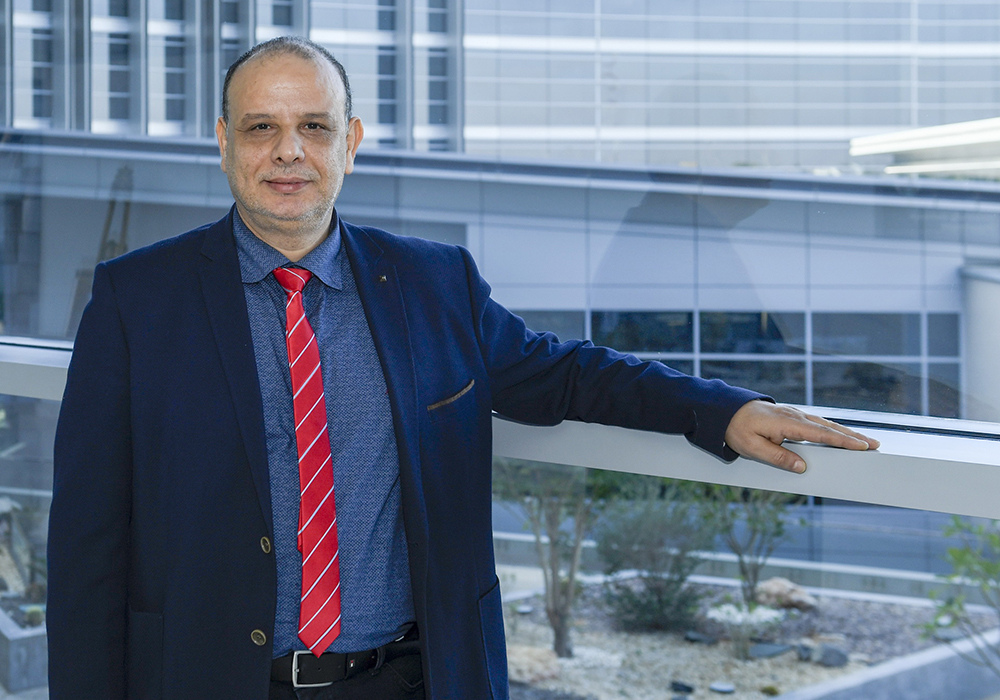
Researchers from the College of Medicine and Health Sciences at the United Arab Emirates University (UAEU) have found that modulating brain histaminergic neurotransmission, such as by chronic administration of the histamine H3 receptor antagonist DL77, has dramatic beneficial effects in the pharmacological treatment of Autistic Spectrum Disorder (ASD).
The groundbreaking discovery has shown strong scientific evidence that it may serve
as an effective pharmacological therapeutic target to rescue ASD-like behaviors.
In a recently published study, researchers have highlighted a new and potentially
exciting property of histamine H3 receptor antagonists in reducing the stereotyped
repetitive behaviors of animals with autistic-like features.
Led by Dr Bassem Sadek, Associate Professor in the Department of Pharmacology and Therapeutics at the College of Medicine and Health Sciences, the study, entitled “The histamine H3R antagonist DL77 attenuates autistic behaviors in a prenatal valproic acid-induced mouse model of autism”, was published in the renowned scientific journal Scientific Reports.
“ASD is a neurodevelopmental disorder characterized by impairment in social communication
and restricted or repetitive behavior patterns or interests,” Dr Sadek explained.
“Antagonists targeting H3R are considered potential therapeutic agents for the therapeutic
management of different brain disorders, such as cognitive impairments.”
As such, the effects of chronic treatment with the potent and selective H3R antagonist
DL77 at different doses on sociability, social novelty, anxiety, and aggressive or
repetitive behavior in male adult mice with ASD-like behaviors induced by prenatal
exposure to valproic acid, were evaluated using a battery of behavioral tests. They
included the three-chamber, marble burying, nestlet shredding and elevated plus maze
tests.
Results have shown that autistic mice exhibited significantly lower sociability and
social novelty preference compared to autistic mice, that were pretreated with the
H3R antagonist DL77.
In addition, mice of autistic-like features presented a significantly higher percentage
of buried marbles and shredded nestlet compared to the control mice groups, indicating
that these mice showed higher stereotyped repetitive behaviors.
However, mice of autistic-like features pretreated with DL77 buried a reduced percentage
of marbles and presented a significantly lower percentage of shredding behavior.
In the course of their investigations, which began more than four years ago, researchers also used a battery of animal behavioral models to demonstrate the potential effect of selective and potent histamine H3 receptor antagonists in vivo. The results confirmed the usefulness of using ligands that target histamine H3 receptors in the hippocampus and cerebellum as therapeutic tools in ASD. Based on these findings, investigators concluded that chronic systemic administration of the H3R antagonist DL77 palliated sociability deficits and stereotypies present in the animal model of ASD-like behaviors induced by prenatal VPA exposure, demonstrating the therapeutic potential of H3R antagonists in the treatment of ASD.
Moreover, modulation of central histaminergic neurotransmission by the H3R antagonist DL77 in an inflammatory context may have attenuated proinflammatory cytokine release and oxidative stress levels. “However, additional preclinical experiments in other behavioral test models and with several rodent species are necessary to expand these initial data and to understand the translational potential of H3R antagonists in the therapy of ASD,” Dr Sadek added. “This is a very exciting area of research and we are optimistic about what these new developments may mean in terms of potential new treatments for ASD.”
The experimental findings reported in the recent publication are expected to stimulate further investigations on the potential use of histamine H3 receptor antagonists in patients with ASD.
Do you find this content helpful?
عفوا
لايوجد محتوى عربي لهذه الصفحة
عفوا
يوجد مشكلة في الصفحة التي تحاول الوصول إليها