

UAEU Researcher Helps Global South Authors Publish Internationally
Mon, 6 June 2022
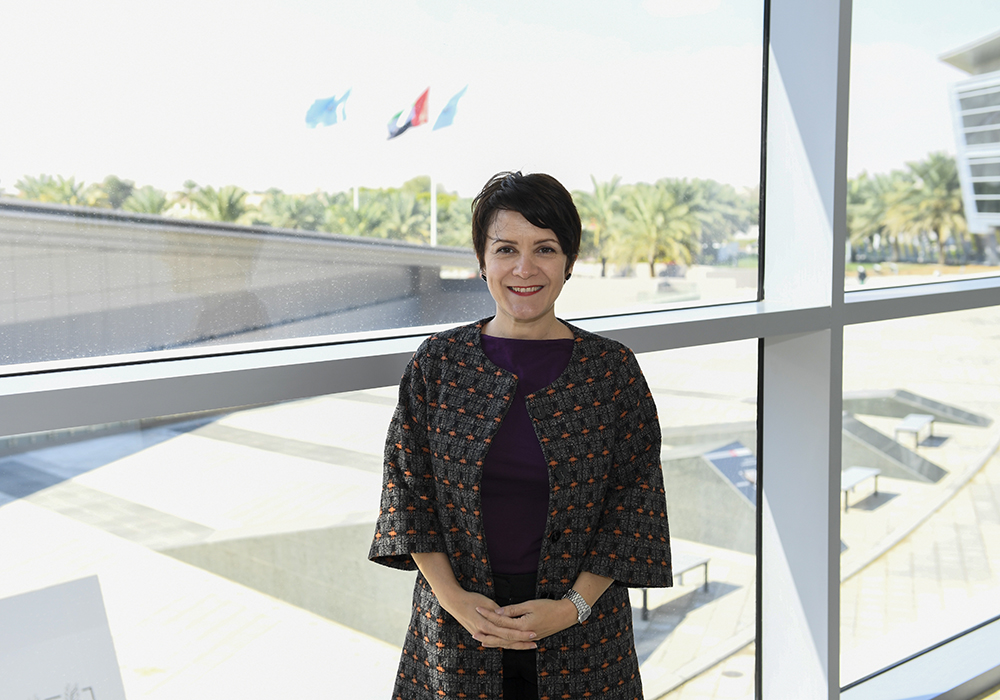
The United Arab Emirates University (UAEU) boasts a number of highly qualified researchers. And Dr Eloisa Martin, Associate Professor in Sociology, is one of them.
As the youngest editor of Current Sociology, a high impact international journal in sociology created in 1952, Dr Martin has helped paved a smoother way for underrepresented academia from the Global South to publish internationally.
“I was the first non-English speaking and not taught in any of the top universities editor – because I did my entire formation in Latin America – to lead a prestigious journal of sociology,” she said. “Because I was at both sides of the table, as a top journal editor and a Global South scholar, I understood and was able to share the rules of the game so other people could participate in a more democratic, pluralistic and diverse way.”
Elected as VP of the International Sociological Association (ISA) in July 2018 at the World Conference of Sociology in Toronto, Dr Martin received the most votes for the position, among all the presidents and VPs. She had been working with the ISA and the ISA journals from 2010 to 2017, when she was also the editor of Current Sociology – a journal she describes as one of the most prestigious in the international arena.
“During my term as editor, besides the normal tasks in a journal administration, I created and conducted a project of academic writing workshops that were prepared to help a sociologist from the Global South and underrepresented academia publish internationally,” she explained. “I travelled the world and did workshops in Africa, Asia, Europe, Latin America and the Middle East, helping authors to communicate.”
The whole idea of the project was not about teaching a unique model of writing, but
about helping these authors communicate their ideas to an international audience.
According to Dr Martin, this had a significant impact in international publications
as an increasing number of such scholars appeared as published authors in the ISA
journals.
“In that sense, my platform as VP of Publications was improving and institutionalizing
these workshops for a bigger audience in a more organized and institutionalized way,”
she noted. “It is very important because, as any scholars know, it is crucial to publish
internationally but it is hard especially for the social sciences because we build
knowledge with words. For those whose first language is not English and who have different
academic styles and ways of thinking, the entire project was helping them move one
step forward to showcase these localized discussions and research for an international
audience.”
She spoke of the project as having a vital commitment to the academic world as it not only encompasses productivity and publishing her own work, but it is changing the geopolitics of knowledge that are, by definition, “unequal”. For Dr Martin, this is due to hegemonic centers where resources and know-how dictate the rules of engagement, forcing the rest of the world to adapt. “The project is about trying to make it easier for underrepresented scholars and academia to be active and be a part of the international academic arena,” she added.
Her initial interest was triggered from a young age, having been an academic editor
for more than 20 years and founding her first journal in the 1990s as a master’s student.
“It’s still healthy and kicking in Latin America, and it is indexed in the most respected
indexes in the region and the Spanish-speaking world,” she explained. “From my work
in that Latin American journal called Social Sciences and Religion, I started to understand
the peculiarities of different national academia.”
She then identified that, in spite of commonalities, there were noticeable differences
in national styles of writing, national agendas and debates. As such, she worked to
create what she calls “spaces of intelligibility”, giving authors the opportunity
to speak in their own language and express their own ideas while trying to find a
common ground of understanding, where they could all comprehend each other without
imposing a unique mode of communication. “This is what I brought first as an editor
of Current Sociology when I was 35, and now as VP of Publications,” she noted. “My
interest was part of my growing up as a scholar.”
Dr Martin, who is a Global South scholar herself, describes her work as a way of making the academic world and the geopolitics of knowledge, more diverse and participative. “It’s about identifying the problem that Global South authors have, no matter the language they speak or the resources they have, in accessing international publications in English,” she said. “There is a fear of being rejected, of not mastering the language or the writing style of communication, so I worked to ease the process of communication.”
Launched in 2010, the project has generated workshops for the past nine years, and recently included the new ISA editors to be part of them. “Last summer, I did a workshop in Brazil, another in Spain and one more in China, and all were very well attended,” she added. “We also conducted workshops in Lebanon, Slovenia, Peru and South Africa. The workshops are organized on the demand and they are free.”
She expects to multiply these workshops within the next three years when her term
as VP ends, with the ultimate goal of having more authors from the Global South and
underrepresented academia in international publications.
Looking to the future, her next steps include continuing with academic writing workshops
and her project of academic peer companion – a platform that involves experienced
authors, with several publications in international journals, helping scholars from
the Global South publish internationally. “It is based on solidarity and dialogical
collaboration: we all win by having more diverse social sciences,” she concluded.
Do you find this content helpful?
عفوا
لايوجد محتوى عربي لهذه الصفحة
عفوا
يوجد مشكلة في الصفحة التي تحاول الوصول إليها