

Enhanced Sulfate Recovery from High Salinity Reject Brine through Simultaneous Chemical Precipitation and Electrocoagulation
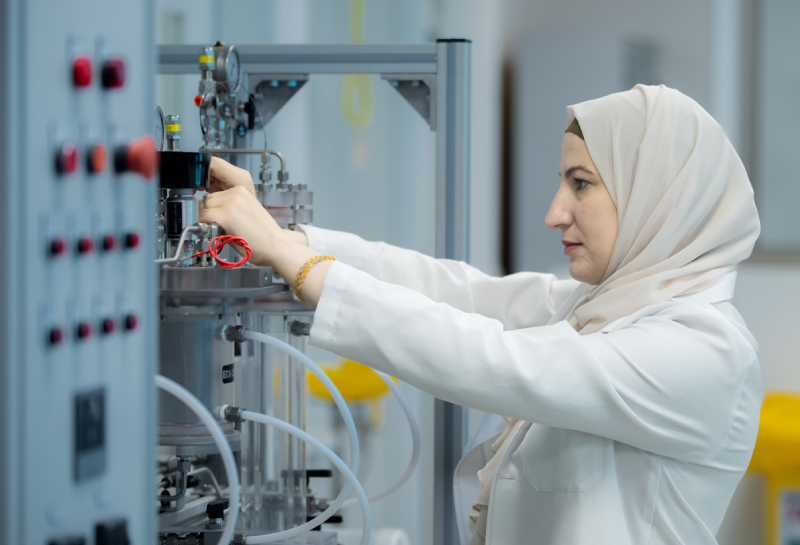 In a groundbreaking study published in the "Cleaner Production Journal" unveiled a
revolutionary technique for sulfate recovery from high-salinity reject brine. Collaborating
with academic and industrial partners, the UAEU research team introduced an inventive
approach that melds chemical precipitation and electrocoagulation. This breakthrough
signifies a remarkable stride in the realm of water treatment and environmental sustainability.
In a groundbreaking study published in the "Cleaner Production Journal" unveiled a
revolutionary technique for sulfate recovery from high-salinity reject brine. Collaborating
with academic and industrial partners, the UAEU research team introduced an inventive
approach that melds chemical precipitation and electrocoagulation. This breakthrough
signifies a remarkable stride in the realm of water treatment and environmental sustainability.
Traditionally, sulfate recovery from high salinity brine has been a complex and energy-intensive process. However, our modified electrocoagulation method offers a more efficient and eco-friendly solution. We utilize highly/moderately alkaline solids such as calcium oxide (CaO), barium hydroxide (Ba(OH)2), hydroxyethyl cellulose (HEC), and ladle furnace slag (LFS) to treat high salinity water. These solids, when added at specific concentrations, work in conjunction with electrocoagulation at precise current densities. Importantly, this method eliminates the need for prior chemical precipitation, reduces energy consumption, and produces solid products that can be further purified using conventional techniques.
Our research team collaborated across departments and with external partners, including other universities, and industry stakeholders. This collaboration allowed us to combine expertise in chemistry, environmental engineering, and materials science to develop this cutting-edge solution. The support and input from these partners have been instrumental in refining our methodology and ensuring its real-world applicability.
The real-world impact of this research is substantial. By successfully combining chemical precipitation and electrocoagulation, we achieved remarkable sulfate removal rates from high salinity reject brine. In particular, our method achieved a sulfate removal efficiency of up to 98% using barium hydroxide, significantly surpassing conventional approaches. Moreover, the energy reduction achieved 40% lower energy consumption compared to the conventional hybrid process is a significant step towards more sustainable and cost-effective sulfate recovery.
 As we look to the future, our research opens doors to addressing critical environmental
challenges associated with brine disposal and sulfate recovery. We plan to further
optimize and scale up this method for industrial applications, collaborating closely
with industry partners. Additionally, our team is committed to exploring similar projects
that leverage innovative solutions to promote cleaner production practices and environmental
stewardship. This research represents a pivotal contribution to the field and reinforces
our university's dedication to advancing sustainable technologies for a better future.
As we look to the future, our research opens doors to addressing critical environmental
challenges associated with brine disposal and sulfate recovery. We plan to further
optimize and scale up this method for industrial applications, collaborating closely
with industry partners. Additionally, our team is committed to exploring similar projects
that leverage innovative solutions to promote cleaner production practices and environmental
stewardship. This research represents a pivotal contribution to the field and reinforces
our university's dedication to advancing sustainable technologies for a better future.
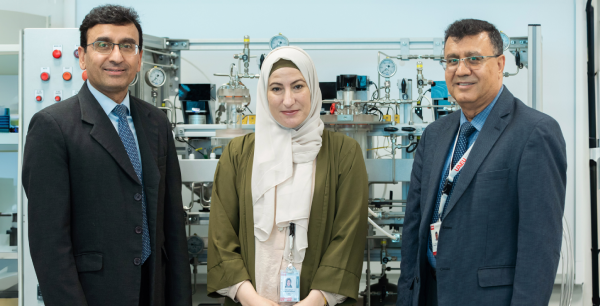
The research team is comprised of Dr. Ameera F. Mohammad, Prof. Ali H. Al-Marzouqi, and Prof. Mohamed H. Al-Marzouqi from the chemical and petroleum engineering department at the College of Engineering, UAE University. Prof. Muftah H. El-Naas from Qatar University, Prof. Bart Van der Bruggen from KU Leuven, Eng. Mohamed Al Musharfy from the ADNOC Refining Research Center, and Dr. Mabruk Suleiman from the Libyan Corrosion Technology and Consultancy Co.