

Foodscaping Working Group
Objectives:
Our team creates and optimizes technologies for the integration of plant and fish production systems into urban living environments. We create ‘foodscapes’ that produce healthy food and provide urban greenery at the same time. Small-scale systems that are easy to install and operate in backyards, rooftops, or between buildings are our main focus. We work with school children to raise awareness for the value of food and agriculture and test whether small-scale plant and fish production units could be operated at public schools.
Team Members:
-
Dr. Abdul Jaleel, Group Leader/ PI
- Dr. Zienab Ahmed, Co-PI
-
Dr. Radhakrishnan Subramanian, Post-Doctoral Fellow
-
Ms. Drishya Nishanth, Ph. D. Student
-
Ms. Ramya Manoharan, Ph. D. Student
Research Highlights:
We grow vegetables and fodder crops in freshwater aquaponics at various scales. Aquaponics are a combination of aquaculture and hydroponic plant cultivation. In this system, nutrient rich effluents from the fish-ponds are used as growth medium for plants. Small-scale aquaponics could be operated at the household or community level, and our group develops protocols for safe and water use efficient operation. These protocols could one day also lay the foundation for automated aquaponic systems.
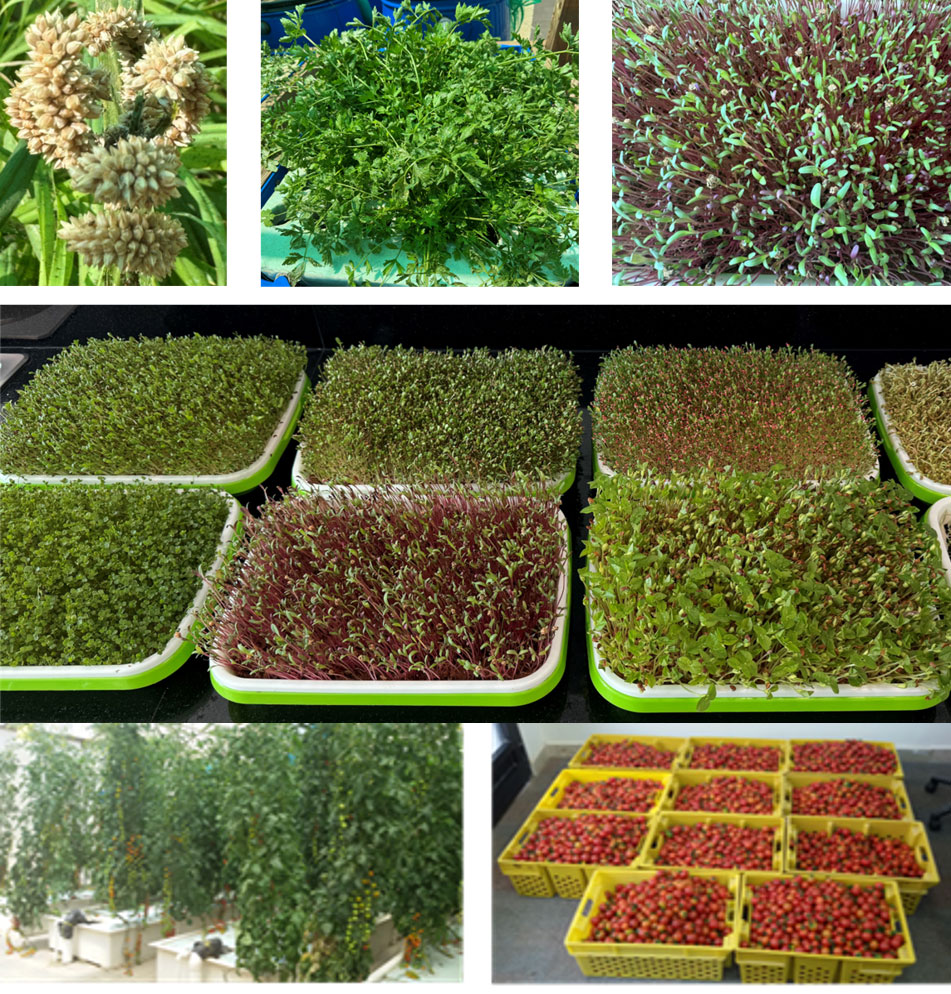
The fish waste provides nutrients to the plants, while the plants filter the water for the fish, requiring the farmers to synchronize the growing cycles of the fish and plants for yield maximization. We developed protocols for aquaponic cultivation of lettuce, coriander, basil, celery, tomatoes, and cucumbers in our freshwater aquaponics system. These vegetables yielded harvest of high quality. Based on these advanced cultivation protocols, we hope to create a fully automated urban farming system (container vegetable cultivation system) that can provide fresh produce year-round while minimizing water and nutrient use efficiency. Our goal is to contribute to a more sustainable food production system that can support growing urban populations in an environmentally friendly way.
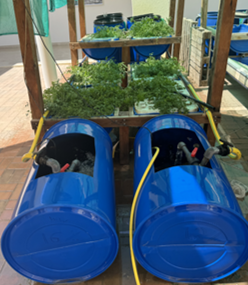
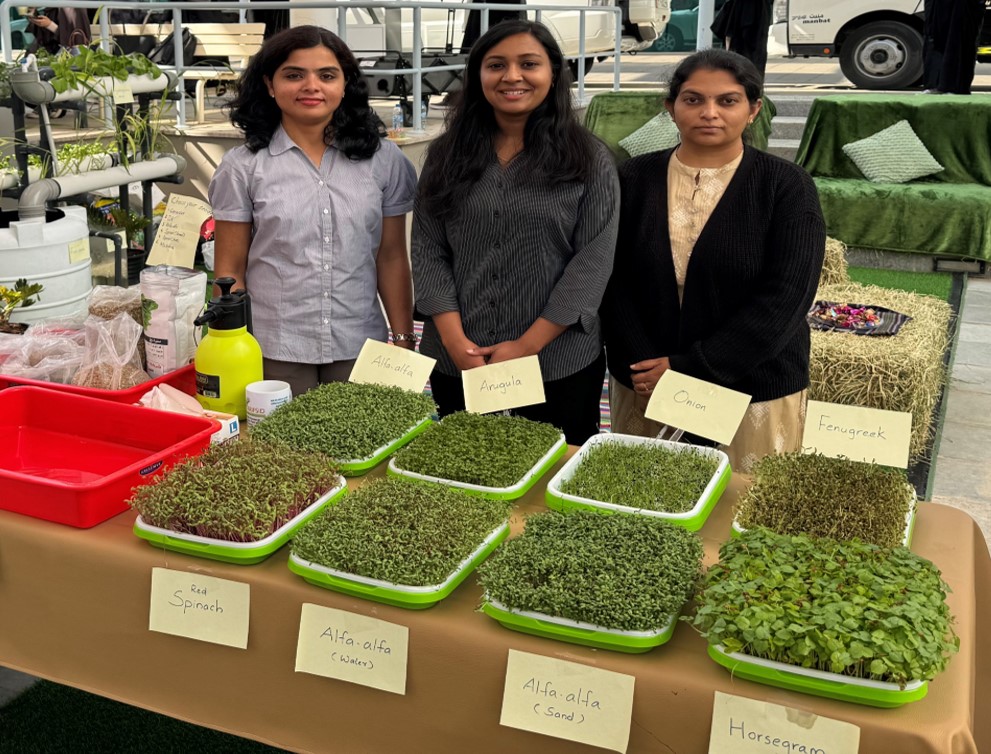
A current aim of our work is to deploy aquaponic systems to the valorization of brackish water, which requires the identification of suitable salt-tolerant plants, such as quinoa, halophytic fooder crops, or leafy greens. We also strive to educate students and urban residents about aquaponic cultivation opportunities in backyard or community settings.
Collaborations:
- We collaborate with the Urban Planning group and the Green Urban Building Design group on successfully integrating plant and fish production systems into urban buildings and residential communities.
- We collaborate with the Agricultural Robotics group on automation of urban farming systems, and AI supported decision support infrastructure.
Do you find this content helpful?
عفوا
لايوجد محتوى عربي لهذه الصفحة
عفوا
يوجد مشكلة في الصفحة التي تحاول الوصول إليها