

Foodborne antimicrobial resistance
Strategies for Reduction of Antimicrobial Resistance Across the Food Supply Chain
Objectives
Our team works toward strengthening strategies for risk management of antimicrobial resistance (AMR) in the UAE food chain. Access to effective and cost-efficient antimicrobials is critical for human and animal health, animal welfare and food security. The potential consequences of antimicrobial resistance include reduced food production, reduced food security, greater food safety concerns, higher economic losses to farm households, and contamination of the environment.
Group Members
- Assoc. Prof. Ihab Habib, Subtheme Lead / PI.
- Dr. Mohamed Mohamed, Post Doctoral Researcher.
- Dr. Glindya Lakshmi, Post Doctoral Researcher.
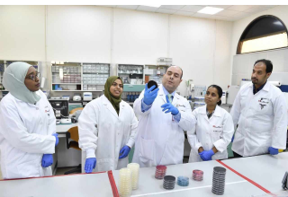
The first work package targets poultry (broiler and layers) and dairy farming in the UAE. All data essential for the epidemiological and ecological studies, as well as microbiological samples for analysis of AMR are obtained.
The complete DNA-extracts and the bacteria identified in the first work package are then used for further genomic-based analysis (first national whole-genome sequencing bank). The aim of this second work package is to understand the extent of AMR in key national animal industries.
Work packages inform the research activities in the third one, where a baseline probabilistic
model for exposure risk assessment (and relative risk intervention options) of AMR
in the UAE food chain is developed. The fourth work package will survey knowledge,
attitude, and practices associated with AMR use in the UAE animal production. In addition,
risky behavior (AMR misuse) will be mapped to endorse a UAE One Health AMR stewardship
policy.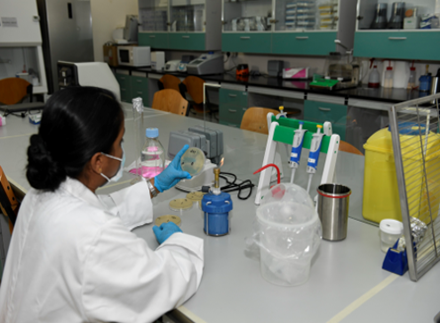
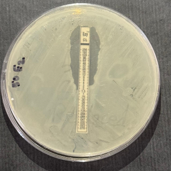
The research themes of the veterinary public health research laboratory are:
- Microbial Food safety.
- Genomic characterization and risk assessment of foodborne zoonoses.
- One Health approach to antimicrobial resistance at the human-animal-food interface.
We collaborate with
- The working group on insect farming,to assess health risks pertaining to the use of insects as animal feed.
- The foodscaping group and the urban planning group, to make sure that circularity in urban farming excludes antimicrobial residues and resistances.
- The farm animal diseases group to develop strategies to minimize the use of antimicrobial agents in animal production and prevent the development of resistances.
Do you find this content helpful?
عفوا
لايوجد محتوى عربي لهذه الصفحة
عفوا
يوجد مشكلة في الصفحة التي تحاول الوصول إليها